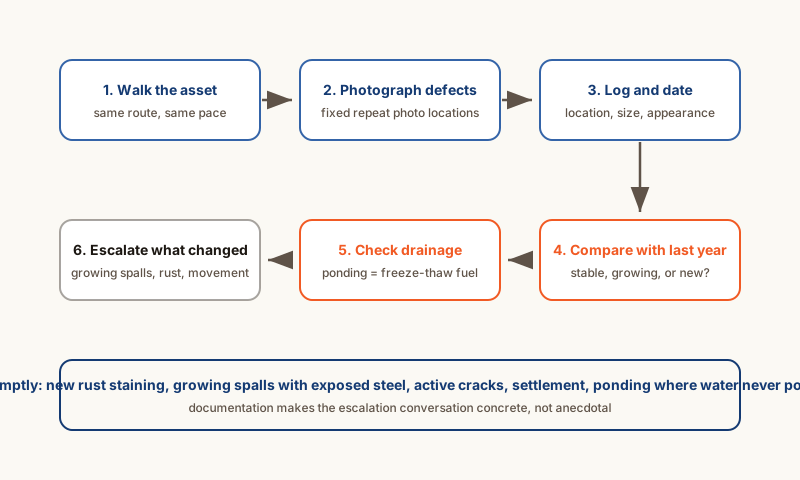
The single most valuable habit in concrete asset management costs almost nothing: one documented walk each spring, done the same way every year. Winter does its work between April visits, and the walk is how you catch scaling before it becomes spalling, and staining before it becomes structural.
Before you walk
- Set up (or reuse) fixed photo locations: a handful of numbered spots, photographed from the same angle each year. A map with pins works; even a phone note with addresses works.
- Bring last year's photos on your phone. The comparison is the point.
- Schedule after melt but before spring works begin, so the concrete is clean enough to read.
The walk, by defect type
Scaling and surface wear
Look at horizontal surfaces where salt and water concentrate: entrance lanes, curb edges, sidewalk corners, garage traffic lanes. Ask: is the surface loss the same as last year, or has it advanced? Widespread shallow scaling is a monitoring item; rapid advance in one area is an escalation flag.
Spalls and pop-outs
For each spall: note location, measure roughly (or pace it off), photograph. A spall exposing rusty steel goes on the escalation list immediately (see rebar corrosion for why). Clean-edged new spalls get compared to last year's photos for growth.
Rust staining
Rust staining is the most information-dense finding in the walk. It means iron somewhere in or on the concrete is corroding: reinforcement (most important), or a fixture or fastener (less important). New rust staining that was not there last year is an escalation item regardless of size.
Cracks
Note new cracks and changed cracks. Width, direction, and whether it crosses or follows elements matter; do not attempt diagnosis from the ground, but document with a scale reference (a coin or tape in the frame). Movement between years is the key observation.
Joints
Sealant condition: split, adhered-failure, missing, or full of debris. Joints are the controlled paths for movement and water; their failure converts both into uncontrolled paths.
Drainage and ponding
Walk after rain if possible. Mark every area that holds water longer than a day. Ponding is the fuel for freeze-thaw, scaling, and chloride concentration (why water transport matters). Blocked drains get cleared; settled areas get logged.
Efflorescence
White salt deposits signal water moving through the element and leaving minerals behind. Occasional light efflorescence is common; new, heavy, or localized efflorescence (especially at joints, cracks, or slab edges) documents an active water path worth tracing.
Trip hazards and settlement
Sidewalks, curbs, and slab edges: note vertical offsets and settled panels. These are safety items with their own response timelines, independent of durability.
Document as you go
For each finding, three fields are enough to make the record valuable:
- Location (specific: "NE entrance lane, 3 m from door").
- Type and size (scaling patch about 1 m2; spall exposing rebar; crack 2 mm wide, 1.5 m long).
- Photograph at the fixed location.
When to escalate
Some findings should not wait for next year's comparison:
- Spalls with exposed, corroded reinforcement.
- New or rapidly growing cracks, especially with offset or displacement.
- Rust staining appearing where there was none, particularly on structural elements.
- Ponding in areas that drained last year.
- Any condition that suggests active movement: closed joints, displaced barriers, settled slabs.
Escalation means a qualified assessment of the specific element, not a product purchase. The inspection's job is to make that call early and with evidence.
Garage and deck additions, where applicable
Structures that receive vehicle-borne salt (parking decks, especially) earn a few extra checks on the same walk:
- Entrance lanes and ramps. These are the hot spots; photograph them every year at the same locations.
- Drains. Clear and check each one; standing water over a drain is a double finding (water and concentrated salt in one place).
- Column bases and walls in the traffic path. The splash zone; rust staining here is corrosion evidence (why that matters).
- Underside checks where accessible. Leaking cracks and joints show below before they announce themselves above.
If the deck has a traffic membrane, its condition (tears, wear-through at turning points, failed seams) is itself an inspection item: the membrane is doing the chloride management, and its condition decides whether the concrete underneath is actually protected.
The habit that makes it work
The value compounds: by year three, the photo series shows exactly which defects are stable, which are growing, and which are new, and that record changes budget conversations from anecdote to trend. Municipalities that formalize this into an inventory get further; see our municipal asset management article.
What this checklist does not tell you
It does not diagnose. It organizes observations so that whoever does diagnose has clean, comparable evidence. It also does not replace professional condition surveys for structures where the stakes justify them.
Where to go next
Scaling, Spalling and Delamination explains what you are photographing, Concrete Asset Management for Municipalities puts the records to work, and Freeze-Thaw Damage in Atlantic Canada explains what winter just did.