Parking structures fail in patterns so consistent that an experienced inspector can predict the trouble spots from the floor plan alone. The reason is simple: a garage is a chloride exposure machine. Everything that lands on the road in winter eventually parks inside.
The salt comes in with the cars
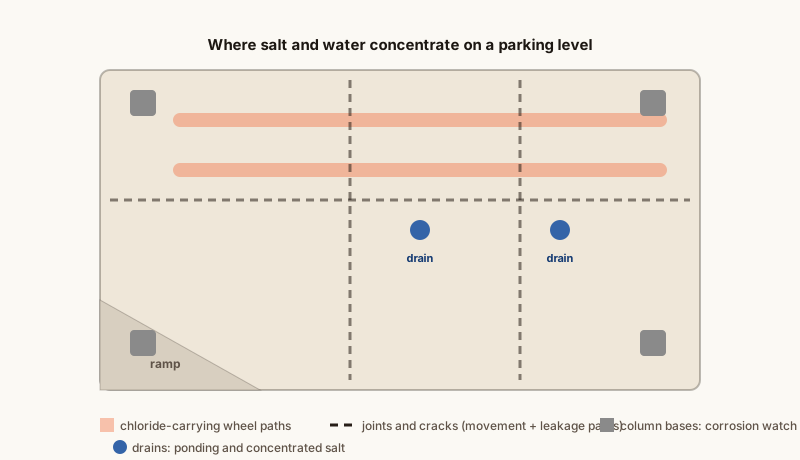
Every vehicle that parks indoors carries winter with it: packed snow, ice, brine-soaked wheel wells, and the slush that falls off as things thaw. The meltwater drains across the slab, carrying dissolved salt with it. This is why a garage deck behaves like exterior pavement, not like a building interior, and why the worst deterioration is usually found in the most mundane places:
- Entrance and exit lanes, where dripping and thawing concentrate in the first metres inside.
- Wheel paths, where tyres press brine into the surface continuously.
- Around drains, where meltwater converges and salt concentrates as water evaporates.
- At joints and cracks, where water enters the slab rather than running off it.
- At column bases and walls, in the splash zone where wheels fling brine upward.
The result is chloride loading concentrated in predictable areas, working on the reinforcement at and below the deck surface.
The deterioration sequence
The chemistry follows the same course as any chloride exposure (our chloride article has the mechanism): chlorides accumulate at the top reinforcement mat, corrosion initiates where concentration crosses threshold, rust expands, and the cover cracks, delaminates, and spalls. In a garage the timeline is compressed by heavy saturation and repeated freeze-thaw on the ramp and deck surfaces.
What owners see, in order:
- Scaling and wear in the entrance lane (the surface problem announcing the salt).
- Rust staining at cracks and along joints.
- Delaminated, hollow-sounding areas over the top steel.
- Spalls exposing corroded bar, most often at drains, joints, and column bases.
Why drainage and joints dominate the timeline
Where water leaves the slab quickly, the exposure is much milder than where it sits. Two maintenance realities follow:
- Ponding areas (blocked drains, settled slabs) concentrate both water and salt, and they are the areas that deteriorate first.
- Joints and cracks admit water directly to the depth of the reinforcement, bypassing the cover entirely. A leaking joint is worse than a scaling surface.
Garage maintenance budgets therefore buy the most durability at drains, slopes, and joints, before any treatment is considered.
Membranes and their role
Many garage decks are protected by traffic membranes or waterproofing systems, which manage the exposure at the surface: they wear, and their renewal is a scheduled cost of the asset. Membrane condition is itself an inspection item: tears, wear-through at turning points, and failed joints reintroduce the salt exposure the membrane was installed to manage.
Protection decisions on decks are layered: the membrane (if present), the concrete quality, the drainage, and the reinforcement cover all contribute, and a preservation strategy for a garage starts with understanding which layers are doing what.
Inspection and testing that change decisions
For an aging garage, the useful evidence, in rough order of information value:
- Delamination survey (sounding) to map hollow areas before they spall.
- Chloride profiles at the top steel depth, in the high-exposure zones and the quiet zones, to know whether the ion supply has reached the bars.
- Half-cell potential mapping where corrosion is suspected.
- Drainage and joint condition, documented every spring.
These convert "the deck looks tired" into a mapped condition with a repair strategy that targets the actual mechanism. FHWA's bridge corrosion research applies the same logic to highway structures; a garage deck is, mechanically speaking, a bridge deck with a roof.
Why garage repairs fail when the exposure is ignored
A pattern worth knowing before approving any garage repair scope: repairs fail at rates directly related to whether the surrounding exposure was managed, not just the patch. A spall repaired over active chlorides and unchanged drainage tends to fail again within its design window, because the patch addressed the symptom while the conditions continued.
The repair sequence that ages well:
- Diagnose (delamination survey, chloride profiles, corrosion mapping where warranted).
- Repair the damaged areas, per the repair specification.
- Address the exposure conditions that drove the damage: drainage, joint condition, chloride management strategy.
- Consider protection of the repaired system and the remaining sound concrete as one decision (the fit assessment for one product is an example of that evaluation done honestly).
Skipping step 1 or step 4 is how the same deck gets re-patched on a short cycle. The step that saves the most money is usually the least glamorous: drainage and joints.
The owner's annual garage walk
A short annual deck walk (in addition to formal engineering inspections) gives owners most of the trend information they need:
- Photograph the entrance lanes, drains, and a few fixed points along the deck.
- Look for new rust staining at cracks, joints, and column bases.
- Note ponding areas and check drains.
- Note any hollow-sounding areas if you have someone who can chain-drag (the delamination section explains the technique's value).
The record feeds directly into the asset management framework, and it changes the eventual engineering engagement from starting from scratch to starting from trend data.
What this article does not tell you
It does not evaluate any specific structure or prescribe repairs. A garage's condition is a technical assessment; the purpose here is to give owners the map of where that assessment should look first.
Where to go next
What Road Salt Does to Concrete covers the salt chemistry, Chloride Ingress and Reinforced Concrete covers the transport, and Repair, Preserve or Replace? frames the response decision. Our recorded webinars include concrete protection sessions relevant to parking structures; see the events page.