Outdoor construction slows for reasons that have nothing to do with concrete: crews, forms and fresh pours do not tolerate frozen ground. The buildings themselves do not stop. Parkades fill with slush, basements keep taking water, mechanical rooms keep sweating and warehouse floors keep carrying loads. Winter is when the balance shifts from new work to the condition of what is already built, and indoor concrete is where that shift is easiest to see.
That makes the season a practical time for review rather than a quiet one. What matters indoors is diagnostic before it is anything else: find where water enters, where it sits, and what it has already done to the surface and to the steel below it. This article covers where indoor concrete protection fits in a commercial building, what the exposures really are, and how a review runs before anyone starts talking about product.
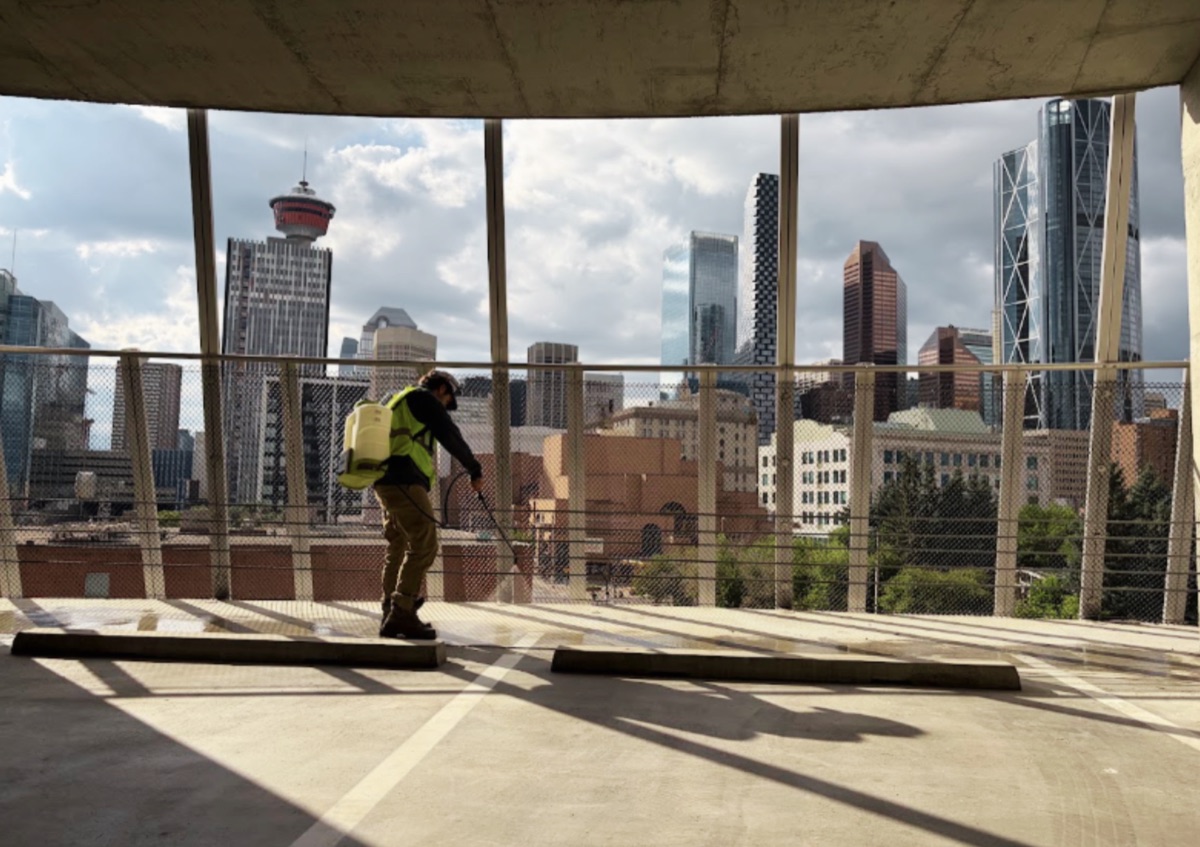
The building types worth reviewing indoors
The categories that come up in almost every winter review:
| Space | What drives the exposure |
|---|---|
| Underground parkades and garages | Vehicle-borne chloride, melting snow, drainage and freeze-thaw at entrances |
| Commercial basements and foundations | Moisture migration through walls and floors, plus limited drying |
| Industrial and commercial floors | Abrasion, point loads, and water carried in by traffic |
| Mechanical rooms and utility areas | Condensation, leaks, penetrations and repeated wetting |
| Warehouses and service bays | Equipment traffic, washdowns and tracked-in road salt |
| Agricultural and livestock buildings | Manure and washdown chemistry, moisture and freeze-thaw |
These are not equivalent exposures, and a treatment decision made for one is not automatically right for another. A warehouse floor and a parkade deck can both be sealed concrete, but they fail for different reasons at different rates.
Why indoors is not the same as mild
Roofs and walls keep weather out. Floors, slabs and below-grade walls are where the building meets water, and that does not change with the season. Three mechanisms do most of the damage:
- Chloride delivered by vehicles. A parkade is an exterior exposure that pretends to be a building. Meltwater drains across the deck carrying dissolved salt, and the worst damage clusters in entrance lanes, wheel paths, drains and column bases.
- Moisture migration. Water moves through slabs and walls by capillary action and vapour movement, then evaporates at the surface. Where it cannot dry, it stays and reacts.
- Freeze-thaw at the edges. Even in a heated garage, the entrance apron and the plowed exterior ramps keep cycling through freeze-thaw, and scaling starts there.
Corrosion is what connects them. Chlorides reach the reinforcement, the steel expands, and the cover cracks, delaminates and spalls. The full sequence is set out in our chloride article and, for garages specifically, in why parking garages deteriorate.
What a winter review looks like
The inspection sequence matters more than the equipment, because the walk-through determines what any later treatment is worth:
- Walk the water. Find where it enters, where it slows down and where it stops. Drains, slopes and door thresholds explain more of the damage pattern than surface appearance does.
- Check the joints and penetrations. A leaking joint sends water past the cover directly to the reinforcement. No surface treatment fixes that.
- Sound the surface. Delaminated areas sound hollow, and mapping them now gives a baseline that later surveys can be compared against.
- Confirm the working conditions. Most treatments need a dry surface, a minimum temperature and a cure window. Indoors that usually means heat and ventilation, both of which are easier to arrange in an unoccupied space.
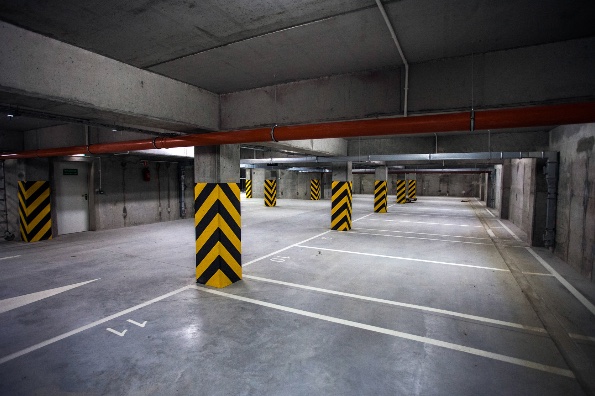
That last point is the practical advantage of winter. Space is easier to take out of service in a quieter season, and interior work is not exposed to weather. The trade-off is that any water present has to be dealt with before work starts, and drying an enclosed space takes longer than most schedules assume.
Where PRO Tek Concrete fits, and where it does not
A penetrating treatment is a surface protection measure, not a structural repair. It fits an existing slab or wall that is sound, dry enough to accept it, and free of active leaks and contamination. It does not replace repair of delaminated or spalled concrete, it does not stop water that is moving through a crack or joint, and it does not change the condition of steel that has already started to corrode.
Where it fits, the value is in slowing the surface processes that make the next problem: absorption at the surface, and the pathways that carry water and dissolved salts inward. That is why preparation matters more than the product on the label: cleaning, surface condition and moisture at the time of application determine the result.
Where to go next
- Why parking garages deteriorate: the chloride exposure machine in detail.
- Industrial concrete floor durability: abrasion, loads and what floor damage actually means.
- Road salt and concrete damage: the chemistry that arrives on your vehicles.
- Where PRO Tek fits: the product's actual position in a repair and protection sequence.